
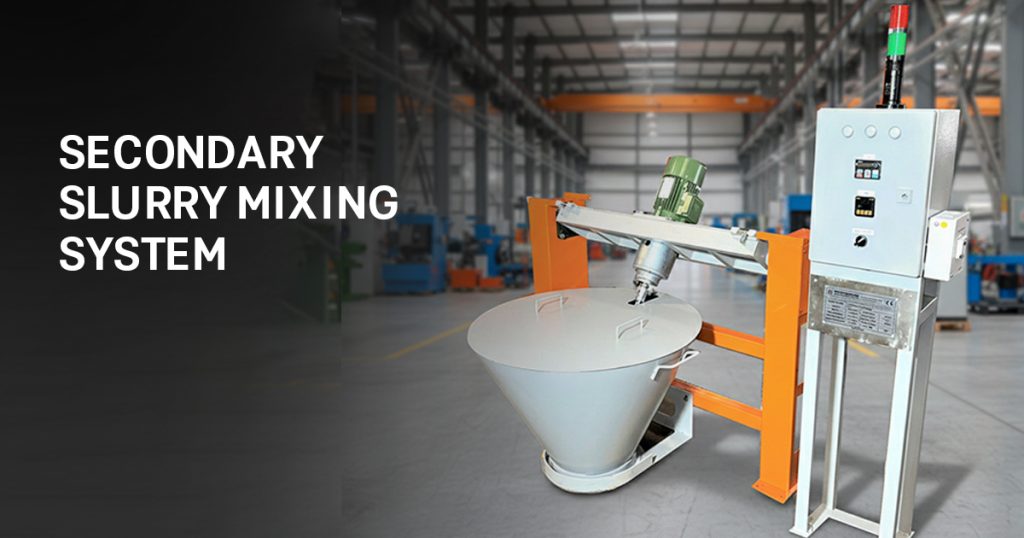
The preparation of slurries in investment casting is critical to the quality, robustness and dependability of the ceramic shells. The primary slurry mixers do the initial mixing of slurry, while the secondary slurry mixers ensure slurry consistency throughout the shell building process. As the casting needs and quality control become more stringent, the importance of secondary slurry mixers in contemporary foundries has grown.
How Slurry Works in Investment Casting
Starting off, ceramic slurry holds everything together when making a shell. The liquid mix creates the initial coat – and layer after layer – shaping what the cast will become. A blend usually includes heat-resistant particles tied together by binding agents, along with extras fine-tuned to exact needs. When the mixture wavers in thickness or settles too soon, trouble follows. Flaws like splits in the shell, lopsided walls, or rough outsides often trace back to these shifts.
Fresh batches need steady flow, yet stuff piles up after hours of running. Particles drop out when left too long; thickness drifts without warning. Heat shifts sneak in, altering how things move. That moment calls for extra mixers nearby – keeps everything flowing right.
Secondary Slurry Mixer Basics?
From time to time, a steady flow matters most when working with ceramic slurry. This device steps in after the initial blend is made. Its job begins once powders and liquids have already mixed. Keeping things uniform becomes its main role. Not creation – maintenance shapes its purpose. Stirring happens continuously, preventing settling. Movement through tubes supports even texture. Consistency stays within tight limits across hours of work. While first-phase systems build the mixture, this one preserves it. Smooth operation avoids clumps or separation. Production runs without hiccups depend on such balance.
Floating through each cycle without pause, secondary slurry mixers by Laxminarayan Technologies stop solids from settling. They spread refractory grains and binding agents evenly throughout the mixture. Motion never breaks, keeping consistency steady across batches.
Why Secondary Slurry Mixers Are Critical
Finding ways to keep slurry consistent gets harder when factories make more parts or switch to automatic shell systems. Machines that mix slurry a second time help fix key problems that come up.
-
Preventing settling of solids
-
Maintaining stable viscosity
-
Ensuring uniform shell thickness
-
Keeping up with ongoing shell construction phases
-
Reducing shell-related defects
Finding balance in slurry traits begins with secondary mixers – foundries then see steadier outcomes, fewer surprises. Quality holds more firmly when blends stay consistent.
Key Parts and How They Are Built
Mixing Mechanism
What makes Laxminarayan Technologies secondary slurry mixers different is the shape of their agitators – built to stir slowly but thoroughly. Instead of churning violently, they move just enough to keep particles suspended. Air stays out because violent blending brings bubbles, and bubbles lead to fragile shells. Strength remains high since nothing disrupts the mixture’s balance.
Robust Tank Construction
From materials that resist rust, the mixing tank is built to handle ceramic slurries. Inside, a slick finish stops gunk from sticking around too long. Cleaning takes less effort because nothing clings tight. Toughness meets smooth function where slurry flows.
Variable Speed Control
Slurry thickness, what it’s made of, maybe even how hot it gets – these change how fast you need to mix. Speed controls give room to respond. Different shell types? They never act the same way. Adjusting on the fly keeps things steady.
Slurry Circulation Support
Pumps move slurry back through return pipes, linking up with secondary blenders. This setup keeps flow steady from dip baths to blending areas.
Benefits of Secondary Slurry Mixers
1. Consistent Slurry Properties
Mixing without pause keeps the mix smooth and particles spread out. This way, every wax shape gets a layer just like the last one.
2. Improved Shell Quality
A steady mix helps avoid issues like cracks in the coating, drips, uneven areas, also separation between levels.
3. Enhanced Productivity
Mixing slurry without constant human help keeps shell production moving – fewer pauses mean more output over time.
4. Reduced Material Waste
A well-kept slurry lasts longer, which means less waste and fewer materials used over time.
5. Better Compatibility With Automation
Fine control over slurry flow keeps robots running without hiccups. That steady rhythm comes only when backup blenders step in to smooth out every batch.
Integration With Laxminarayan Technologies Shell Building Systems
Out here, secondary slurry mixers made by Laxminarayan Technologies fit right into setups using these parts:
From hands-on workstations where shells are assembled by hand.
Automated and robotic shell building systems.
Primary slurry preparation units.
Slurry pumps and dipping tanks.
Fresh ideas help foundries build a full slurry setup tied to strong shell results. By mixing smart steps, each part of the process lines up without gaps. Smooth flow comes from linking pieces that work well together. What matters most shows up when shells meet strict standards. A clear path forms when every detail fits the bigger picture.
Uses in Investment Casting Plants
Secondary slurry mixers are widely used in foundries producing:
-
Automotive castings
-
Industrial machinery parts
-
Power generation components
-
Medical and precision castings
Fine-tuned shell consistency matters across every use, simply because tough benchmarks for both function and safety must be met.
Quality Control and Process Stability
Over time, steady slurry behavior helps shops keep coating steps predictable. Because consistency locks in key variables – like how long parts soak or sit dripping – processes stay uniform across batches.
When things stay steady, figuring out problems gets easier. Fewer guesswork tweaks are needed because of that consistency. Predicting how the whole process behaves becomes more doable, simply by keeping conditions stable.
Economic Advantages in Foundry Operations
A surprise benefit? Machines that stir slurry a second time cost more at first. Yet savings build fast when waste drops. The mixture lasts longer too. Less hands-on work is needed over time. Performance gets better without shouting about results. Money spent comes back through steady gains.
Choosing Laxminarayan Technologies means foundries pick slurry mixers that fit how much they make and what goes into the mixture – cutting costs without guesswork. Their options adjust smoothly whether output is small or large, matching real needs instead of assumptions. Each setup works cleanly within existing lines, skipping delays. Custom blends stay consistent because equipment responds exactly to recipe demands. Budgets hold steady since nothing gets oversized or wasted. Performance stays even when materials shift slightly day to day. Matching machine size to operation avoids extra spending right from startup.
Secondary slurry mixers are essential for the consistent maintenance of slurry and the preservation of the quality of shells in investment casting. They help sedimentation, slump viscosity, and assist in uninterrupted operational processes, thus allowing foundries to boost productivity and improve casting quality. Laxminarayan Technologies’ secondary slurry mixers cater to the needs of today’s foundries, providing dependability, versatility, and smooth integration with shell building systems. For foundries prioritizing quality and efficiency and aspiring for sustained success, investing in a secondary slurry mixer of high performance is a tactical choice.